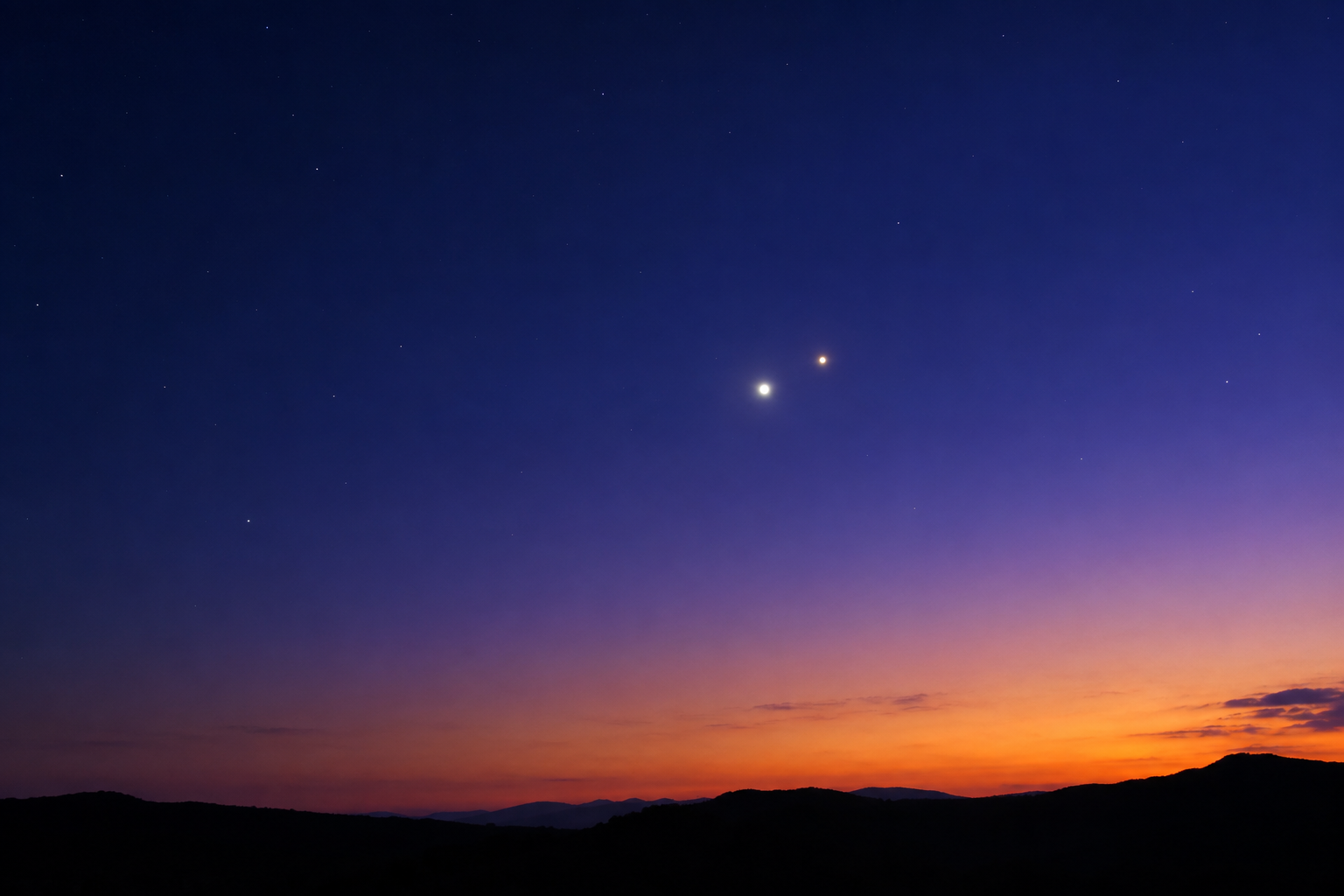
You can enjoy a crescent Moon early, then a Moon-free sky for a patient Orionid meteor watch after midnight. (Moon timetable; Orionids guide)
- Crescent Moon: Look toward the southwest around 7 PM Eastern, after the 6:24 PM sunset. The Moon sets at 8:21 PM at our mid-Atlantic reference near Allentown, Pennsylvania. Give yourself a clear view above the trees, rather than waiting until it is close to setting (sunset timetable; Moon timetable).
- Early Orionids: If you stay up past midnight Eastern into October 15, scan a broad area overhead. Meteors can appear anywhere in the sky, not just near Orion, and the Moon is already below the horizon. Treat a sighting as a welcome surprise: the shower is active, but its October 21 to 22 peak is still ahead (Orionids guide; Moon timetable).
For your meteor watch, find a spot away from bright lights and allow your eyes 20 to 30 minutes to adjust. Keep your phone screen dim or put it away; bright screens interfere with night vision (Orionids guide).
Moon note: Waxing crescent; next rise is 12:28 PM Eastern tomorrow, October 15, at our reference location (Moon timetable).
Enjoy a little time under the sky, and join the free NOOMMED newsletter for your next backyard outing.