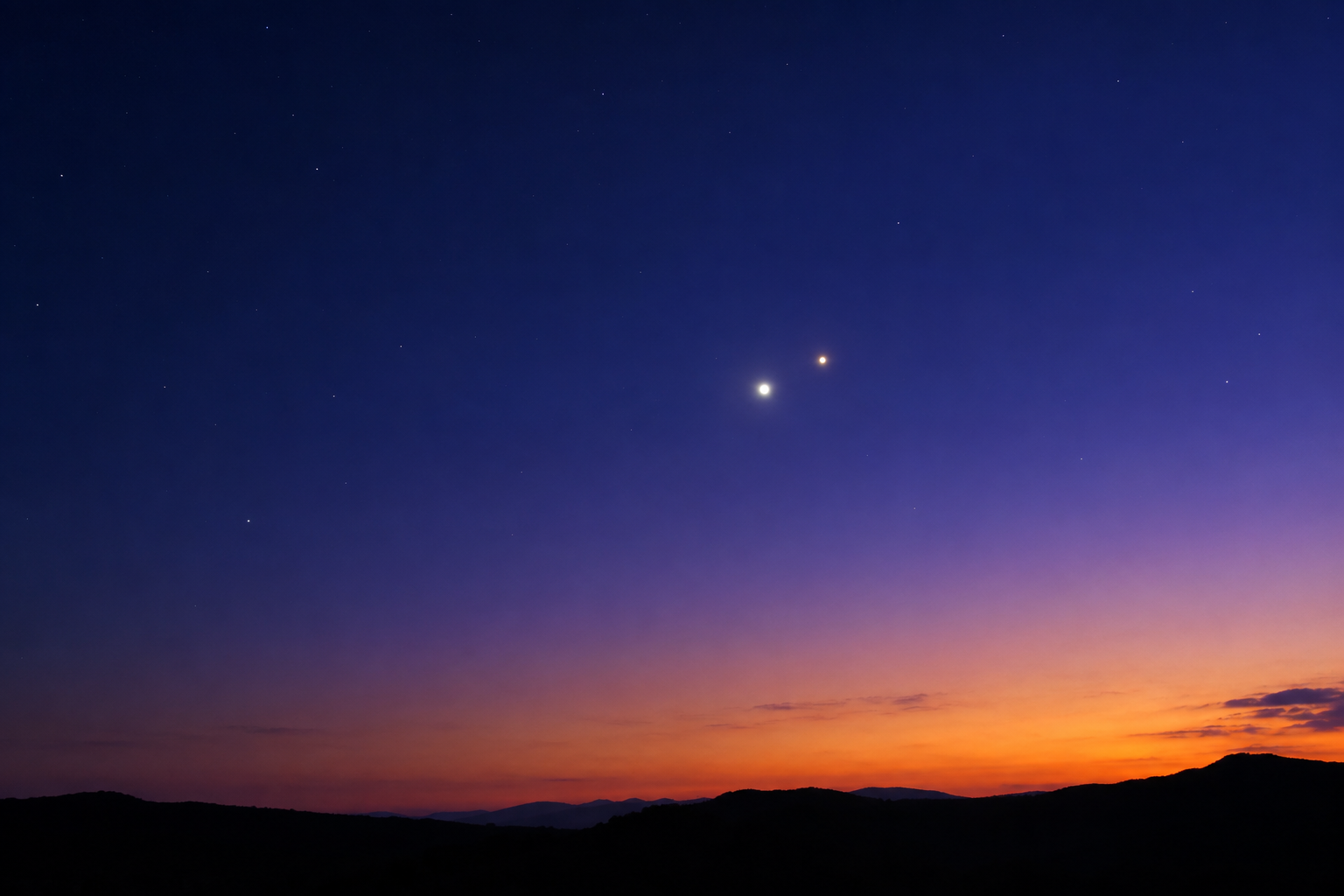
The Orionid meteor shower lingers one night after its peak, so you still have a chance to catch a streak in the last dark hour before dawn. (Royal Observatory; Orionids guide)
- Evening Moon: After the 6:12 PM sunset, look toward the east and then the south as the evening goes on. At our mid-Atlantic reference near Allentown, Pennsylvania, the Moon is highest at 10:17 PM Eastern, nearly full and impossible to miss (sunset timetable; Moon timetable).
- Orionids before dawn: The Moon sets at 4:26 AM Eastern on Friday, October 23. After that, step outside to a dark spot, lie back, and scan broadly overhead rather than only toward Orion. Meteors can appear anywhere in the sky (Moon timetable; Orionids guide).
The Royal Observatory lists the Orionid maximum for October 21, so tonight is one day past the peak. Bright moonlight hides the fainter streaks for most of the night, which makes that short window after moonset your best bet. Keep expectations modest and enjoy any meteor as a bonus (Royal Observatory; Orionids guide).
Moon note: Waxing gibbous (more than half lit and growing), 89 percent illuminated; moonrise is 4:20 PM Eastern today at our reference location (phase calendar; Moon timetable).
If the early alarm is not for you, the bright Moon is a lovely sight at any hour. Join the free NOOMMED newsletter for more backyard sky plans.